Shorter warming could ease lab workflow, but does it hold up on live birth and perinatal outcomes?
A new study from London Women’s Clinic cohort offers outcomes data for labs weighing a switch to fast warming.
A retrospective cohort study of 4061 blastocyst warmings at London Women’s Clinic found no significant differences in survival, live birth rate (LBR) or early perinatal outcomes between a 1-minute pre-equilibrated thawing solution (TS) protocol and a traditional stepwise protocol.1
Why it matters: Shorter warming protocols have reported encouraging clinical results, but the authors note few data on whether those results are maintained for live birth and perinatal outcomes. This cohort includes 1020 babies born after ultrafast warming, providing direct outcome data rather than survival or clinical pregnancy alone.
The study
- Study design: Retrospective cohort. Allocation was sequential by treatment period: a historical traditional-warming cohort, then an ultrafast cohort from November 2023.
- Population: 4061 blastocyst warmings in 3657 frozen embryo transfer cycles (2761 ultrafast, 1300 traditional). Autologous IVF/ICSI only; PGT and donor-oocyte cycles excluded.
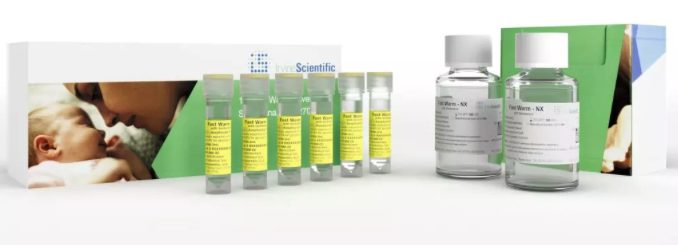
- Conditions: All embryos were vitrified with Vit Kit-Freeze NX. Traditional warming used stepwise trehalose (1.0, 0.5, 0 M) over 11 minutes. Ultrafast warming used pre-warmed 1.0 ml TS (30 minutes at 37°C), for 1-minute on a 37°C stage, before moving into embryo culture medium.
- Main outcome measure: Primary was live birth rate (LBR) per embryo transferred. Survival was defined as >50% re-expansion after 2 hours of culture.
Clinical pregnancy was defined by the presence of a gestational sac and live birth information was patient self-reported. Congenital abnormalities were also self-reported and listed as a secondary outcome but are not reported in the results.
Key findings
Embryological and clinical outcomes (ultrafast vs. traditional):

- Survival: 99.6% vs. 99.2% (p=0.12)
- Clinical pregnancy per embryo transferred: 41.5% vs. 40.7% (p=0.7)
- LBR per embryo transferred: 37.0% vs. 35.4% (p=0.68)
- Miscarriage after fetal heart confirmation: 4.5% vs. 5.3% (p=0.39)
Adjusted analysis. Multivariable logistic regression accounted for patient age, embryo age (patient’s age at vitrification), fertilization method, sperm source, embryo quality, and transfer attempt number. Warming protocol was not an independent predictor of live birth: OR 1.01 (95% CI 0.84-1.22, p=0.909) across all attempts, and OR 1.06 (95% CI 0.79-1.43, p=0.692) in first transfers only (n = 837). The authors found no interaction between embryo quality and warming protocol.
Perinatal outcomes. The authors report no significant differences in twin rate (4.4% vs. 3.8%, p=0.64), monozygotic twinning (1.8% in both groups), singleton birthweight (3319 ± 609 g vs. 3372 ± 615 g, p=0.23), or gestational age.
Lindsey VerMilyea, senior clinical research coordinator at Nexpring Health, notes the strength of the cohort’s composition. “It’s a large sample, and these are autologous, non-PGT-tested embryos. That makes it essentially all-comers, not the ‘cream of the crop’ you get with donor eggs or known euploid embryos.”
She also noted that embryo quality was equally dispersed between groups and that birth weights are similar and seem unaffected.
Protocol implications
The ultrafast protocol replaces the stepwise series with a single solution, but 1 minute refers to time in TS only. TS must be equilibrated for at least 30 minutes at 37°C beforehand.
“These findings are reassuring, with no evident additional risk relative to traditional warming in the outcomes measured,” says VerMilyea. “The fast protocol (TS-only) offers workflow relief while supporting the clinical results labs expect for their patients.”
Bottom line
In a single-center cohort of autologous, non-PGT blastocysts, TS-only warming for 1-minute showed no significant differences from the traditional 11-minute stepwise protocol in survival, live birth, or early perinatal outcomes.
Labs considering the change should audit their own survival and pregnancy metrics after switching, as this evidence comes from one center with a historical comparator and partly self-reported endpoints.
Want to learn more?
Get the facts on one-step warming →
Sources:
- Linara-Demakakou E, Shah T, Al-Hasimi B, et al. Embryo warming using an ultrafast protocol: perinatal outcomes from 1020 births from a single UK IVF centre. Reprod Biomed Online. 2026;52(6):105696. doi:10.1016/j.rbmo.2026.105696