Lisa Love, Lab Manager at Pacific Northwest Fertility, presented findings at ASPIRE showing that undisturbed culture boosts Day 5 blastocyst yield in conventional insemination. She explains how reducing mid-culture handling may influence embryo development.
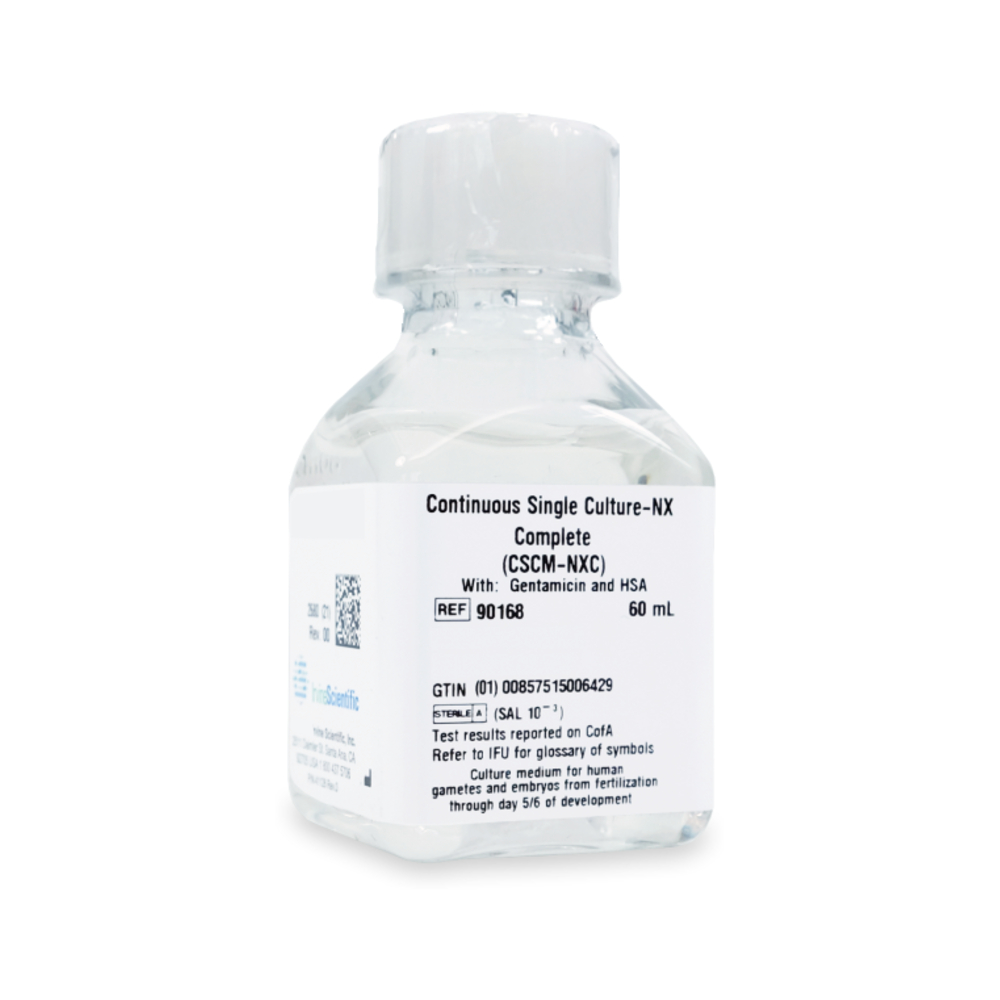
A prospective randomized trial from Pacific Northwest Fertility comparing low lactate continuous culture CSCM-NXC with and without Day 3 medium refresh found no difference in overall blastulation or euploidy rates. Conventional insemination cycles showed significantly higher Day 5 quality blastocyst rates when culture remained undisturbed (37.4% vs 24.8%, p=0.003).1
Why it matters: Adjusting your protocol to eliminate the Day 3 medium refresh for conventional insemination could shift more embryos to Day 5 development, potentially improving clinical outcomes.
The findings challenge routine handling practices and raise questions about whether mid-culture disturbances undermine developmental kinetics even when overall blastulation rates look unchanged.
The study
Lisa Love, Pacific Northwest Fertility Lab Manager, and colleagues investigated whether the standard Day 3 medium refresh for continuous culture is necessary to protect embryo health. The mid-culture refresh is thought to prevent ammonium buildup and pH instability, while uninterrupted culture reduces handling and environmental stress.
Primary outcomes: Quality blastulation rate on Day 5, Day 6, and overall (Days 5-6 combined); secondary outcome: euploidy rate via trophectoderm biopsy. Day 7 blastocysts excluded from analysis
Study design: Prospective randomized study (June-September 2025), single IVF center
Sample size: 370 autologous oocyte retrieval cycles; 196 patients (2882 oocytes) with Day 3 refresh vs 174 patients (3186 oocytes) with undisturbed culture through Day 7
Culture system: CSCM-NXC continuous culture medium; both ICSI and conventional insemination used; isolette-based handling for oocyte and embryo manipulation
Key findings
Overall outcomes were equivalent. MII maturation (74.7% vs 74.9%), normal fertilization (78.4% vs 78.3%), overall quality blastulation (54.7% vs 54.8%), and euploidy rates (47.2% vs 48.9%, p=0.446) showed no statistical difference between groups. Skipping the Day 3 medium refresh may save time and materials without compromising success.
Conventional insemination cycles showed a meaningful Day 5 advantage. Without the Day 3 medium change, these cycles produced significantly more quality Day 5 blastocysts (37.4% vs 24.8%, p=0.003) and higher overall quality blastulation (61.2% vs 48.8%, p=0.008). ICSI cycles showed no such difference.
The procedural difference matters here. In Love’s lab, conventional insemination is handled in an isolette, whereas ICSI requires work on a heated stage without CO₂ support.
If ICSI embryos already experience substantial handling during denudation and injection, the Day 3 refresh may be a comparatively minor additional stress.
Love’s interpretation: it’s about cumulative handling stress. “I’ve ‘grown up’ in a lab whose lab directors focused on protecting the oocyte, ensuring as minimal disturbance as possible,” she said. “I do think we’re seeing the difference in handling time impacting the development potential of any resulting embryos post insemination.”
Protocol implications
Next steps for labs using conventional insemination: Try eliminating the Day 3 medium refresh and track your Day 5 vs Day 6 blastulation rates. Love recommends sibling-split trials with careful attention to “timing of culture disturbances, in particular time not within an isolette or incubator.”
If you replicate the Day 5 shift, it may have clinical relevance, as Day 5 euploids implant at higher rates on average than Day 6 euploids.2,3
When not to touch. Love raised an intriguing possibility: that embryos in group culture may interact through paracrine signaling or condition their microenvironment in ways we disrupt with mid-culture handling. “There may be interactions between embryos in culture that we could unintentionally be disturbing with added media changeovers, or ‘touches,’ midway through embryo culture.”
If she’s right, the principle extends beyond medium refreshes to any unnecessary intervention that destabilizes culture conditions.
What’s next: Blastocyst quality and euploidy rates predict success, but live birth per euploid transferred would give a more complete picture. Love plans to analyze outcomes as these patients go through frozen embryo transfers.
Bottom line
Undisturbed continuous culture improves Day 5 quality blastulation rates without compromising overall outcomes for conventional insemination.
If you’re currently doing Day 3 medium refreshes, test an undisturbed protocol, track Day 5 vs Day 6 yield, then follow through with clinical outcome analysis to see whether the kinetic shift translates to better live birth rates.
At minimum, these findings support that skipping the Day 3 refresh doesn’t compromise success across fertilization methods and fits with the ‘less touch’ culture philosophy.
Lisa Love is a Lab Manager at Pacific Northwest Fertility. Her presentation “Comparing the safety and efficacy of a mono-phasic embryo culture medium when refreshed on day 3 versus continuously culturing through the blastocyst stage” was delivered at the 15th Congress of the Asia Pacific Initiative on Reproduction.
Want more information on our continuous culture system? Get the facts on CSCM-NXC.

Sources:
- Love L, Purcell S, VerMilyea L. Comparing the safety and efficacy of a mono-phasic embryo culture medium when refreshed on Day 3 versus continuously culturing through the blastocyst stage. Presented at the 15th Congress of the Asia Pacific Initiative on Reproduction; May, 2026; Beijing, China.
- Poulsen V, Ingerslev HJ, Kirkegaard K. Elective embryo transfers on Day 6 reduce implantation compared with transfers on Day 5. Hum Reprod. 2017; 32(6):1238-1243. doi:10.1093/humrep/dex059
- Bourdon M, Pocate-Cheriet K, Finet de Bantel A, et al. Day 5 versus Day 6 blastocyst transfers: a systematic review and meta-analysis of clinical outcomes. Hum Reprod. 2019; 34(10):1948-1964. doi:10.1093/humrep/dez163