At a glance
In a comparative study of vitrified human blastocysts, fast warming produced no difference in initial survival compared to conventional multi-step warming. In three replicate studies, no differences were observed in re-vitrification survival, with all embryos demonstrating osmotic responsiveness and intact cell membranes (100%).
The study
Schiewe and colleagues set out to evaluate rapid, one-step dilution of human blastocysts and prospectively assess ultra-fast versus conventional re-vitrification.
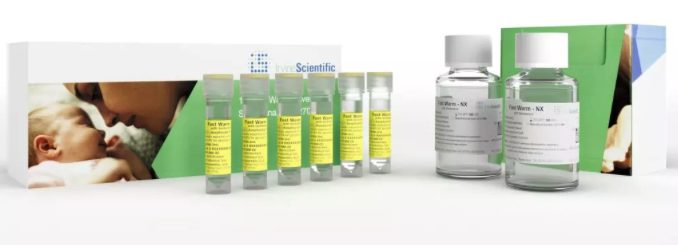
They first compared rapid to conventional warming. Blastocysts were warmed for one minute in 37°C NX thaw solution. In the rapid-elution group, embryos were then transferred directly to isotonic LGH plus protein for five minutes. In the conventional-elution group, embryos underwent a six-minute dilution-solution step before isotonic equilibration. Each group included 55 blastocysts.
Then, they evaluated re-vitrification approaches using either EG/DMSO-based NX solutions or glycerol/EG, DMSO-free ICE solutions. Conventional vitrification used five-minute exposures in V1 and V2 followed by one minute in V3. Ultra-fast vitrification used one minute in V1 and one minute in V3. Re-vitrified blastocysts were subsequently warmed using the rapid-elution approach and assessed for initial survival and cellular integrity, followed by approximately 18-24 hours of post-warm culture.
What they found
No difference was observed in initial survival after traditional versus fast warming (99.1% overall). In the initial re-vitrification replicates, all embryos were osmotically responsive with intact cell membranes.
On vitrification kit, initial survival was likewise unaffected. However, at 24-plus hours, the ICE kit showed a higher rate of degenerated blastocysts (25%) than the Vit Kit Freeze NX kit (9.4%). The authors attribute this gap to low sample size and embryo-level variation rather than a kit-specific effect, since initial survival was equivalent between the two.
Why it matters
Twenty years ago, vitrification protocols running 10 to 15 minutes represented a major advance over slow-freezing methods that took days, and even those shorter protcols already delivered survival rates above 95%. This study pushes that further. Now, the ultra-fast vitrification can run in about two minutes with no drop in survival – a meaningful cut in hands-on time per embryo.
Want to learn more?
Get the facts on one-step warming →
Sources:
- Schiewe MC. Comparative re-vitrification (RVTF) of human blastocysts aimed at validating ultra-fast vitrification and rapid (one-step) elution (RE) approaches. Fertil Steril. 2023; 120(4): e113–e114. doi.org/10.1016/j.fertnstert.2023.08.367